

Entering the forex market can be intimidating. Data is streaming at a fast pace, and new terminology keeps popping up at every corner and every click. While it may be confusing to new entrants in the forex market, with proper strategy and orientation, these hurdles can be channelled into advantages.
Within the confines of the guide, we will examine forex strategies for new traders to give those who are new to the markets an understanding of how to properly deal with the markets. As we conclude, we will have acquired the knowledge to trade with confidence and make no errors at all.
Understanding Forex Trading Basics
Before using any strategy, it is essential to know the basics. In the Forex market, trading is the act of buying one currency while simultaneously selling another. This is because the value of a particular currency is measured in relation to another. Prices change based on the happenings in the international economic environment.
We follow currency pairs such as EUR/USD, GBP/USD, and USD/JPY. Every price movement is calculated in pips. Pip is the smallest unit that changes in price for currency pairs. For an individual who is starting, it is imperative to learn and understand pips.
Setting Realistic Goals
First comes realistic objectives; after all, nobody should expect to make huge profits in their maiden trades. Yet, we strive for consistency, so aiming at a few pips daily, taking into consideration the size of our lots, compounds over time into respectable figures.
We also have to define our trading style. Some traders like only short-term trades that last minutes or even hours. Others hold positions for days or weeks. Our strategies must match the chosen style to be effective.
Forex Strategies for Beginners
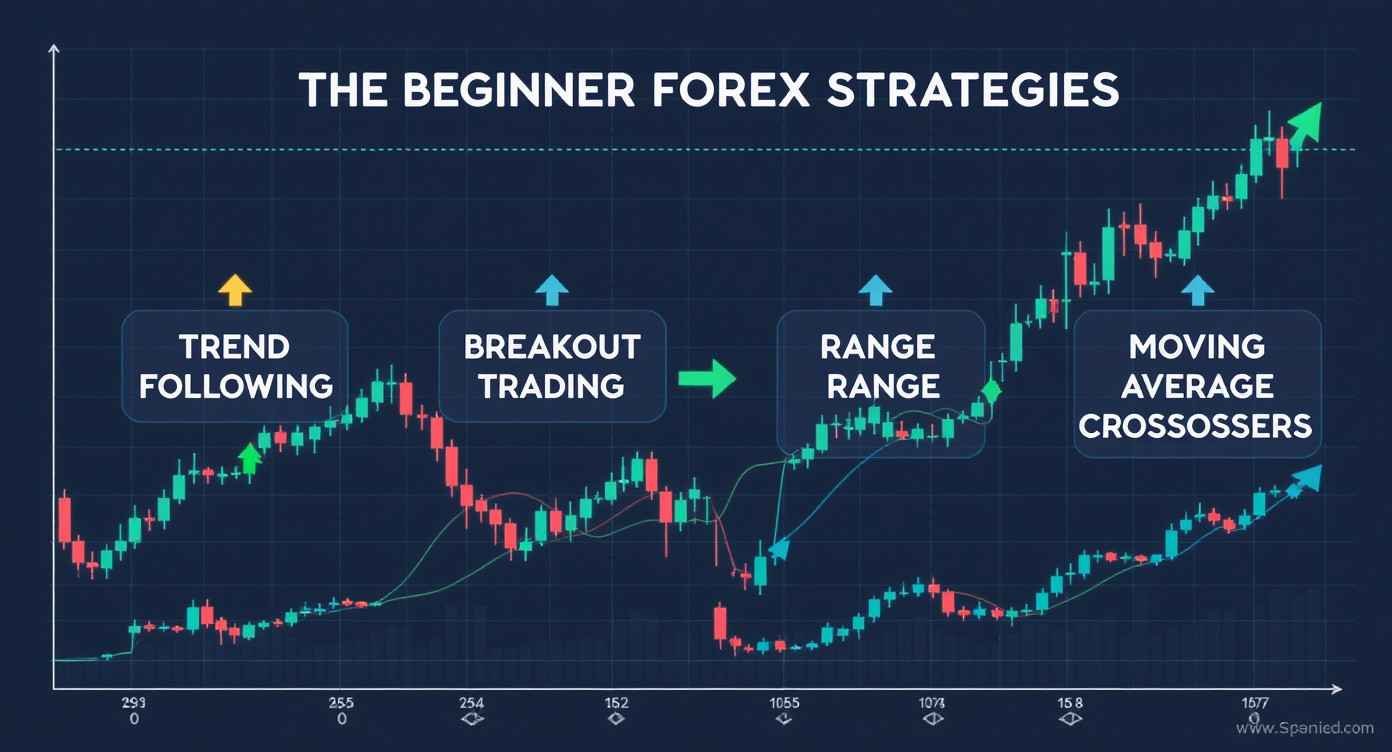
Now, let’s discuss actionable forex strategies for beginners that can guide our trading journey.
Trend Following
One simple strategy is to follow the market trend. Prices often move in one direction for a period. We look for trends using moving averages or trend lines. When the price moves consistently upward, we consider buying. When it moves downward, we consider selling. Trend-following reduces the chance of entering trades against the market.
Breakout Trading
Breakout trading is based on key support and resistance levels. Once the price breaks above resistance or below support, it usually continues further in the same direction. We monitor charts for breakout signals and enter trades after the confirmation of breakouts. It works really well when there is a high level of volatility in the market.
Range Trading
Sometimes prices move within a predetermined range without indication of a trend. We just buy near support and sell near resistance. Range trading requires patience: we closely watch the price levels and try to avoid trading during breakouts. This strategy works in stable, predictable markets.
Moving Average Crossover
Using two moving averages—one fast, one slow—can signal entry points. When the fast-moving average crosses above the slow one, we buy. When it crosses below, we sell. This method simplifies decision-making and helps beginners follow the market without overthinking.
Risk Management for Beginners
No strategy works without risk management. We always set stop-loss orders to limit losses. For example, if we risk $10 per trade, a stop-loss ensures we don’t lose more than that. Position sizing is critical. Using smaller lot sizes reduces the risk for beginners. Leverage should be used carefully. High leverage may offer bigger profits, but it can wipe out accounts quickly. We also diversify trades. Avoid putting all our capital on one currency pair. This spreads risk and protects our account from sudden market swings.
Using Forex Indicators
Indicators can simplify trading decisions. Common tools include:
- Moving Averages: Identify trends and crossover signals.
- Relative Strength Index (RSI): Shows overbought or oversold conditions.
- MACD: Helps confirm trend strength and potential reversals.
We combine indicators with strategies. For instance, if the RSI shows oversold conditions in an uptrend, it might be a good buying opportunity. Indicators support decisions, but we avoid relying solely on them.
Developing a Trading Routine
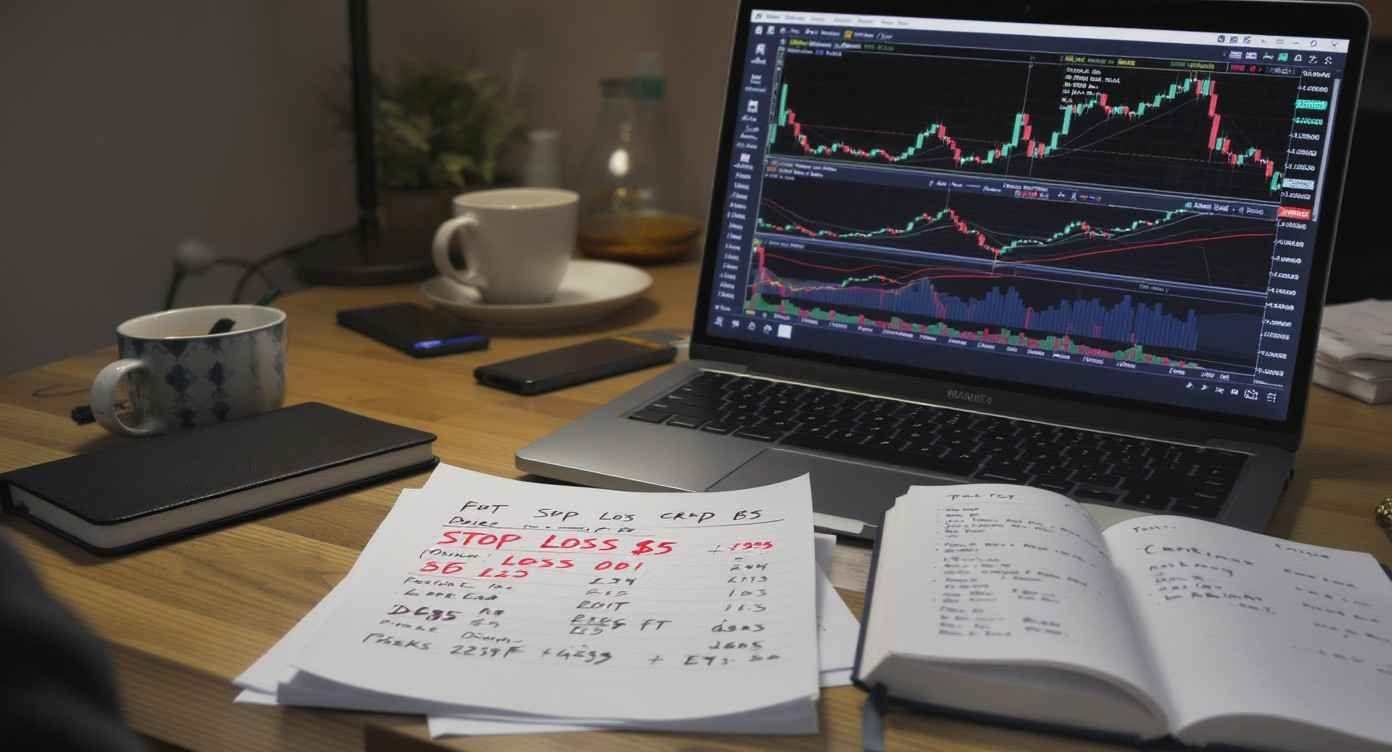
Consistency is important for newbies. We establish a trade routine: we analyse economic calendars, have a look at the charts, and examine the previous trades. It helps us make better decisions and prevents us from making emotional trades. We also keep track of trade journaling. It helps us record the entry and exit points of trades, profit, and loss.
Common Mistakes to Avoid
New traders often make predictable mistakes:
- Overtrading: Entering too many trades without a clear plan.
- Ignoring risk management: Failing to use stop-loss orders.
- Trading based on emotions: Fear or greed can lead to poor decisions.
- Chasing losses: Trying to recover losses quickly often causes bigger losses.
By avoiding these errors, we improve the chances of success in the long run.
Conclusion
It requires patience, discipline, and clear strategies while trading Forex. Using the Forex strategy for beginners allows us to enter the market with confidence. Focus on following a trend, breakout trading, range trading, and moving average crossovers. Risk management should always be there; use indicators judiciously and maintain a proper routine for trading.
Every small step in building experience includes practising on demo accounts and tracking our performance, thus achieving steady results. We respect the risk and calculate trades carefully to trade responsibly. All of these steps mean that even the most uncertain beginners will turn into quite confident participants in the Forex market.
FAQs
What are the simplest forex strategies for beginners?
Trend following, breakout trading, range trading, and moving average crossovers are easy to understand and apply for new traders.
How much capital should beginners start with?
Start with small amounts using Micro Lots. Risk is only a small percentage of the account per trade.
Do indicators guarantee profits?
No. Indicators help make decisions, but profits depend on strategy, risk management, and market conditions.
How long should beginners hold trades?
It depends on the strategy. Scalpers hold minutes, day traders hold hours, and swing traders hold days.
Is leverage safe for beginners?
Leverage increases both potential profit and risk. Beginners should use low leverage until confident in their strategy.