

Looking for a shoe cabinet that combines style and organization? Discover tips to select the ideal shoe cabinet for your home and keep your shoes neatly stored.
A cluttered entryway or messy hallway can instantly make your home feel chaotic, no matter how beautiful the interior is. One simple solution to maintain order and enhance style is a shoe cabinet. Beyond its obvious function of storing shoes, a shoe cabinet can serve as a functional décor element that reflects your home’s personality.
Whether you have a small apartment, a busy household, or a large collection of footwear, choosing the right shoe cabinet can make a huge difference in keeping your space organized. In this guide, we’ll explore the types of shoe cabinets, what to look for before buying, and practical tips for organizing your footwear efficiently.
Why You Need a Shoe Cabinet
1. Keeps Your Home Organized
Shoes left scattered around the entryway or living room can make even the tidiest home feel messy. A shoe cabinet provides a designated space for every pair, allowing you to maintain a clutter-free environment.
2. Protects Your Footwear
Proper storage extends the life of your shoes. By keeping shoes off the floor and in a cabinet, you reduce wear and tear from dust, moisture, and accidental scuffs.
3. Adds Style to Your Interior
Modern shoe cabinets come in a variety of designs—from sleek minimalist styles to rustic wooden finishes. They not only serve a practical purpose but can also enhance the overall aesthetic of your home.
4. Maximizes Space
Small homes and apartments often struggle with storage. A vertical or multi-tier shoe cabinet uses minimal floor space while storing multiple pairs of shoes efficiently.
5. Easy Access
Having a dedicated shoe cabinet means you can find the shoes you need quickly, whether it’s daily sneakers or special occasion heels. Organization saves both time and frustration.
Types of Shoe Cabinets
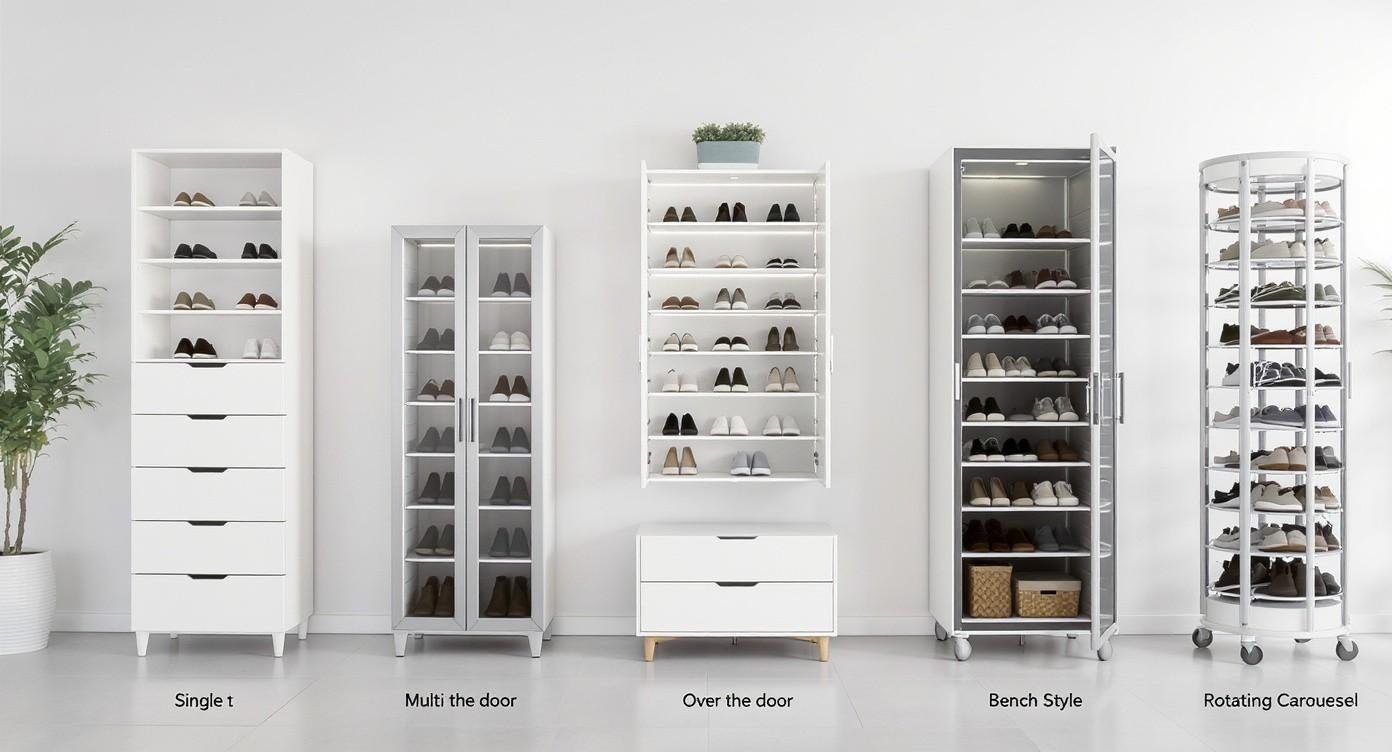
1. Single-Tier Cabinets
Single-tier shoe cabinets are compact and ideal for small spaces. They usually hold 5–10 pairs and fit easily in entryways or hallways.
2. Multi-Tier Cabinets
For families or shoe enthusiasts, multi-tier shoe cabinets offer ample storage. They can store 20–30 pairs of shoes or more, depending on the height and number of shelves.
3. Over-the-Door Cabinets
These are perfect for apartments or homes with limited floor space. They hang over doors and store shoes in pockets or slim compartments, keeping them out of sight.
4. Bench Cabinets
Bench shoe cabinets combine seating and storage, making them ideal for hallways or mudrooms. You can sit down to put on shoes while keeping them neatly organized underneath.
5. Rotating or Carousel Cabinets
A more high-tech option, rotating shoe cabinets store shoes in a vertical carousel design, making them easy to access while taking up minimal floor space.
Choose the Right Shoe Cabinet
When selecting a shoe cabinet, consider the following:
1. Measure Your Space
Before purchasing, measure your hallway, entryway, or room where the cabinet will go. Ensure there’s enough room for doors to open and drawers to pull out.
2. Count Your Shoes
Determine how many pairs you need to store. This helps you choose between a single-tier, multi-tier, or larger cabinet.
3. Material Matters
Shoe cabinets come in wood, metal, and high-quality plastic. Wooden cabinets add warmth and style, metal cabinets are durable and modern, and plastic options are lightweight and budget-friendly.
4. Style and Design
Choose a cabinet that matches your home décor. Sleek, minimalist cabinets work well in modern homes, while rustic wooden cabinets complement traditional interiors.
5. Type of Storage
Decide whether you want open shelves, closed compartments, tilt-out drawers, or pull-out racks. Closed compartments keep dust away, while open shelves allow quick access.
6. Budget Considerations
A shoe cabinet is an investment in organization and style. Prices vary based on size, material, and design. Decide your budget beforehand, but focus on quality and durability.
Tips for Organizing Shoes in a Shoe Cabinet
- Sort by Season: Keep summer shoes separate from winter boots. This simplifies access and reduces clutter.
- Group by Type: Arrange sneakers, formal shoes, heels, and boots in separate sections.
- Label Compartments: Especially useful for families, labeling each compartment prevents mix-ups.
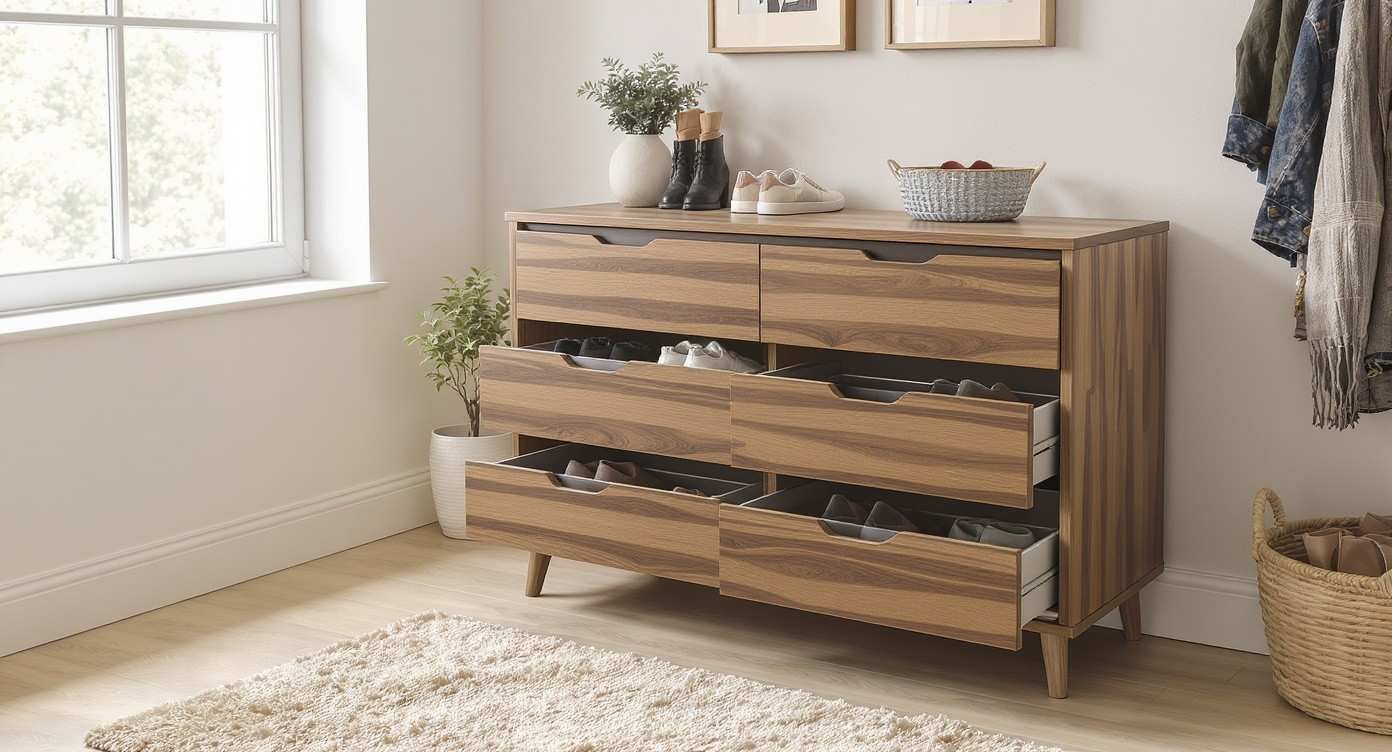
- Store Shoes Vertically: Maximize space by stacking or tilting shoes in compartments designed for vertical storage.
- Regularly Declutter: Periodically review your collection and donate shoes you no longer wear.
Benefits of Investing in a Quality Shoe Cabinet
A high-quality shoe cabinet provides more than just storage. Here’s why it’s worth investing in one:
- Durability: Well-made cabinets last for years without warping or breaking.
- Aesthetic Appeal: Stylish designs enhance your home’s look.
- Easy Maintenance: Cabinets with smooth surfaces are easier to clean and maintain.
- Customization Options: Some cabinets allow adjustable shelves to fit different shoe sizes.
Summary
A shoe cabinet is an essential piece of furniture for any home looking to combine organization with style. From protecting your shoes and keeping your space clutter-free to adding an elegant touch to your décor, the right shoe cabinet makes a noticeable difference.
When choosing a shoe cabinet, consider size, material, design, and storage type. Organize your shoes by season and type, and invest in a cabinet that’s both durable and visually appealing. Whether you opt for a single-tier compact cabinet, a multi-tier family-sized option, or a bench-style combination of seating and storage, a shoe cabinet is a practical solution for every home.
Investing in a quality shoe cabinet not only keeps your footwear safe but also enhances the functionality and style of your home. Don’t let clutter rule your entryway—choose the perfect shoe cabinet today.
FAQs
How many pairs of shoes can a typical shoe cabinet hold?
It depends on the type. Single-tier cabinets can hold 5–10 pairs, multi-tier cabinets 20–30 pairs, and larger custom cabinets can store 50 or more.
Can I use a shoe cabinet for boots?
Yes, but taller boots may require a cabinet with adjustable shelves or a specific tall compartment. Bench-style cabinets often accommodate boots neatly.
What’s the best material for a shoe cabinet?
Wood is durable and stylish, metal is modern and long-lasting, and high-quality plastic is budget-friendly and lightweight.
Where is the best place to put a shoe cabinet?
Place it near the entryway, hallway, or mudroom for easy access. Ensure there’s enough space for doors or drawers to open fully.
How do I prevent my shoe cabinet from smelling?
Keep shoes dry, use silica gel packets, and clean the cabinet regularly. Open compartments allow airflow, which helps reduce odor.